
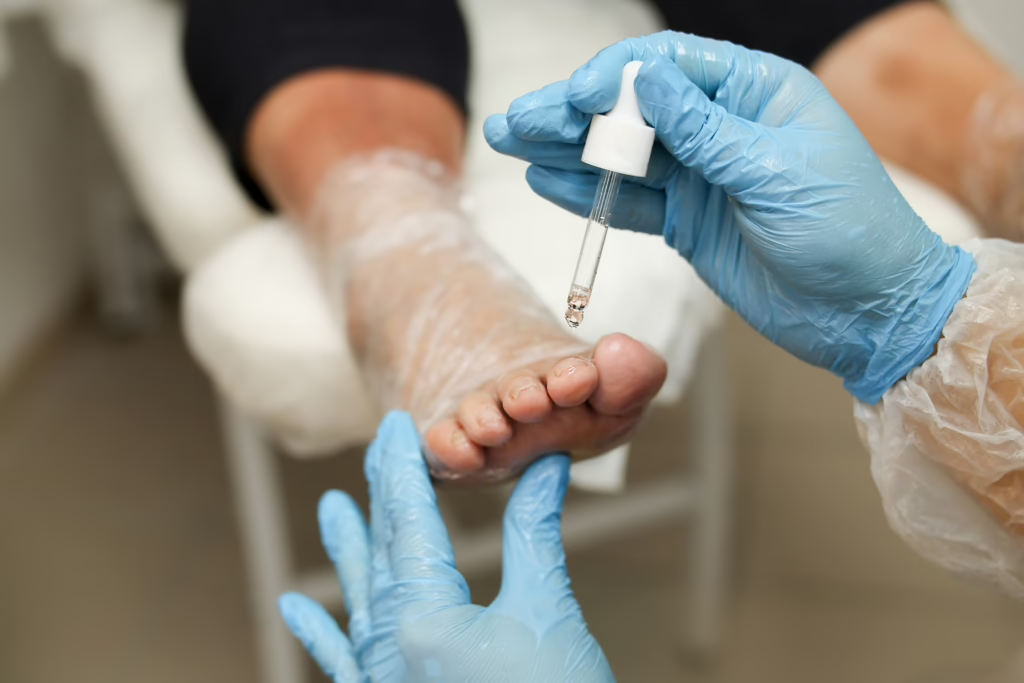
Fungal nail infections are a common foot condition that can cause nails to become thickened, discoloured, brittle, or distorted. At Heaton Podiatry in Bolton, our fungal treatment service provides professional diagnosis and targeted care to restore healthier nails and prevent the infection from worsening.
Many fungal nail infections develop gradually and may persist for months or even years without proper treatment. While over-the-counter remedies often provide limited improvement, professional podiatry care focuses on identifying the infection, reducing fungal load, and supporting healthy nail regrowth.
At our Bolton clinic, every fungal treatment plan is tailored to the severity of the infection and the condition of the nail. Our goal is to improve both the appearance and long-term health of the affected nails.
A fungal nail infection occurs when microscopic fungi invade the nail plate or the skin beneath it. These organisms thrive in warm, moist environments such as shoes, socks, and communal changing areas.
Over time, the infection can cause visible changes to the nail, including:
Although fungal infections are rarely serious, they can spread to other nails if left untreated. Professional treatment helps manage the infection and encourages healthier nail growth.
Many people initially ignore the early stages of fungal nail infections, assuming the nail will return to normal on its own. However, the condition usually progresses without treatment.
You may benefit from fungal treatment if you notice:
A podiatrist can confirm whether the changes are caused by a fungal infection or another nail condition.
Treatment at Heaton Podiatry begins with a detailed examination of the nail and surrounding skin.
Your appointment may include:
Clinical assessment
The podiatrist evaluates the nail to confirm signs of fungal infection and assess its severity.
Mechanical nail reduction
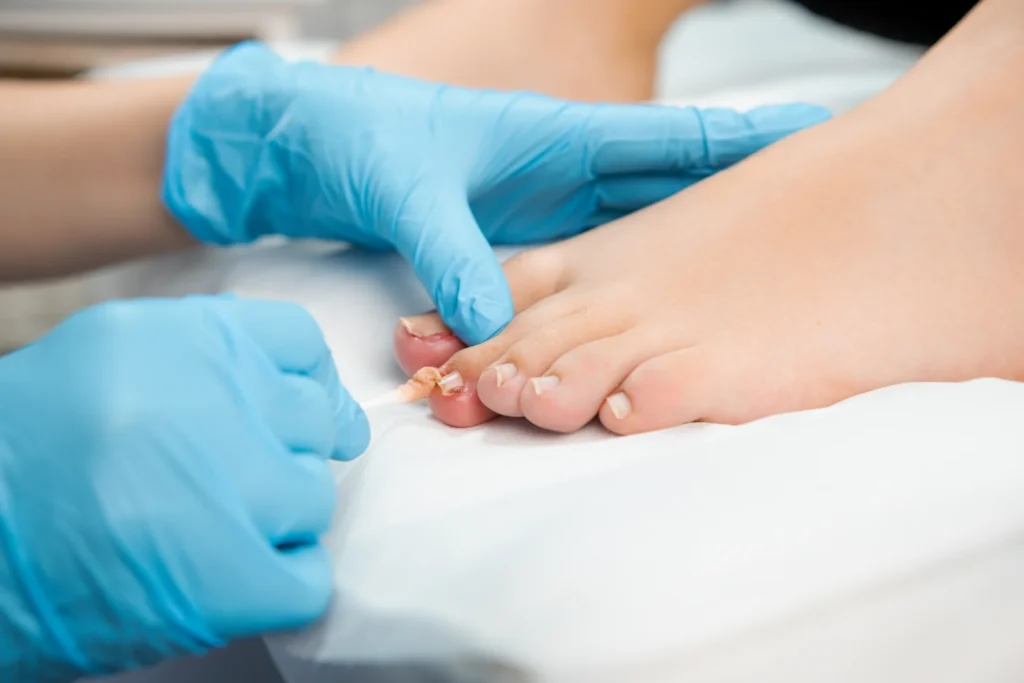
Thickened or damaged portions of the nail may be carefully reduced to remove infected material and improve treatment effectiveness.
Medical-grade treatment application
Depending on the infection, appropriate topical treatments or management strategies may be recommended.
Advice to prevent reinfection
You will receive guidance on footwear hygiene, nail care, and environmental factors that can contribute to fungal growth.
This structured approach helps reduce the infection while supporting healthy nail regrowth.
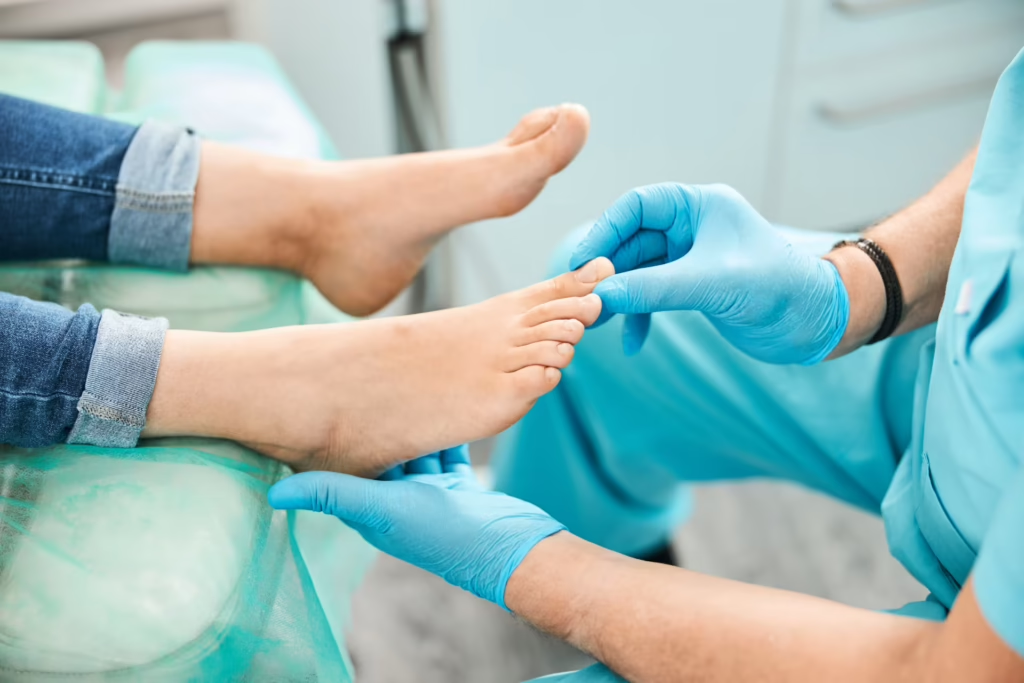
At Heaton Podiatry, we diagnose and treat a wide range of foot and lower limb conditions. From common concerns such as nail problems and heel pain to more complex issues affecting mobility and comfort, our experienced team provides personalised care to help you stay active and pain-free.
At Heaton Podiatry, fungal nail treatment is delivered as part of a comprehensive foot care approach.
Patients choose our Bolton clinic because we provide:
Our focus is on improving nail health while supporting long-term foot hygiene and comfort.
Simple habits can reduce the likelihood of fungal infections returning after treatment.
Podiatrists often recommend:
Good foot hygiene plays an important role in preventing fungal reinfection.
Yes. Fungal infections can spread through contact with infected skin, surfaces, or footwear.
Some mild infections may improve over time, but many persist or worsen without professional care.
Most treatments are comfortable and focus on reducing thickened nail material to improve nail health.
Toenails grow slowly, so visible improvement often occurs gradually as healthy nail replaces the damaged portion.
Reinfection is possible, which is why preventative care and proper foot hygiene are important.



EXCELLENTTrustindex verifies that the original source of the review is Google. I was absolutely blown away by an instant diagnosis for a condition that has affected my son's feet for years. We have tried all sorts recommended by both Doctors and Pharmacists but the treatment either wasn't successful or the condition came back. Knowledgeable Professional advice on why the other treatments wercourse given. No follow up needed.Posted onTrustindex verifies that the original source of the review is Google. Zain was superb. He was professional, knowledgeable, and made me feel comfortable throughout the appointment. Everything was explained clearly and the treatment was very thorough. I would highly recommend.Posted onTrustindex verifies that the original source of the review is Google. Just had my second appointment with Zain treating my nail fungus. I can already see results which I’m very happy about. Additionally, Zain is a pleasure to talk to and makes each session as comfortable as possible.Posted onTrustindex verifies that the original source of the review is Google. Zane at Heaton Podiatry is amazing! I cannot recommend him enough. He is easy to talk to, great at explaining the problem and very knowledgeable. The Biomechanical Assessment is very informative and fascinating at the same time. He has a calm demeanor which puts you at easy, he is just the best!Posted onTrustindex verifies that the original source of the review is Google. Zain is incredible!!! ⭐️ After suffering many years of pain & trialling multiple different insoles due to having flat feet, my 15 year old daughter can now wear whichever shoes she likes with her custom made insoles. Zain took the time to listen & understand her problems (in a way no one else has before), he explained in depth the way the foot functions and gave her daily exercises to strengthen the arches in her feet. We are now 6 months in and she hasn’t complained once, it really has been life changing. I cannot recommend Zain enough, he is a rare gem in the foot world and really knows what he’s talking about ⭐️ he is also great with kids, he really gets on their level ☺️ Thank-you so much!Posted onTrustindex verifies that the original source of the review is Google. Zain was brilliant at advising me on what to do moving forward with my toes. Very professional and would recommendPosted onTrustindex verifies that the original source of the review is Google. If you're ever unlucky enough to have foot problems, Zain is your man. Friendly, personable and knowledgable. V glad I went.Posted onTrustindex verifies that the original source of the review is Google. Zain from Heaton Podiatry is very knowledgeable and provides a very professional service. He uses state of the art technology and offers clear explanations and advice. My custom orthotics are proving very beneficial. Thanks Zain.Posted onTrustindex verifies that the original source of the review is Google. Dreaded attending this appointment but Zain provided an exceptional and knowledgeable service. So summary of condition completed and immediate work carried out. Thereafter Zain provided a guidance of self treatment for the coming weeks with a second appointment in 2 months time when I should be discharged with my feet in tip top shape again !!! 😀👍. Thanks Zain….exemplary service .
Booking with Heaton Podiatry is quick and easy. Our experienced team provides professional foot care to keep you comfortable and mobile. Secure your appointment today and take the first step toward healthier feet.
We and our partners, including Google, use cookies and personal data to analyse traffic and for ads personalisation and measurement. You can accept, reject or choose which cookies to allow. Privacy Policy • Cookie Policy • Terms & Conditions • Google Privacy
We use cookies to help you navigate efficiently and perform certain functions. You can choose which categories to allow below. Cookies categorised as Necessary are always active.
We also use third-party cookies for analytics and advertising. These are only stored with your consent. You can update or withdraw consent at any time via the cookie icon at the bottom-left. This site operates under UK GDPR, the Data Protection Act 2018, and the Privacy and Electronic Communications Regulations (PECR). Cookie Policy • Privacy Policy
Necessary cookies are required for core site features including security, network management, and consent storage.
| Cookie | Duration | Description |
|---|---|---|
hmdg_cookie_consent | 180 days | Stores your cookie consent preferences. |
PHPSESSID | Session | WordPress session identifier. |
wordpress_logged_in_* | Session | WordPress login authentication. |
Functional cookies enable enhanced features such as live chat and remembering preferences.
| Cookie | Duration | Description |
|---|---|---|
wp-settings-* | 1 year | Stores user interface preferences. |
Analytics cookies help us understand visitor behaviour. Controls analytics_storage for Google Analytics 4.
| Cookie | Duration | Description |
|---|---|---|
_ga | 2 years | Google Analytics — distinguishes users. |
_ga_* | 2 years | Google Analytics 4 — session persistence. |
_gid | 24 hours | Google Analytics — distinguishes users. |
_gat | 1 minute | Google Analytics — throttles request rate. |
Performance cookies collect aggregate, anonymous data about site performance.
| Cookie | Duration | Description |
|---|---|---|
_gat_gtag_* | 1 minute | Google Tag Manager — rate throttle. |
Marketing cookies track visits to deliver relevant ads. Controls ad_storage, ad_user_data, and ad_personalization.
| Cookie | Duration | Description |
|---|---|---|
_gcl_au | 90 days | Google Ads — conversion tracking. |
_gcl_aw | 90 days | Google Ads — click attribution. |
_gac_* | 90 days | Google Ads — campaign information. |
IDE | 1 year | Google DoubleClick — ad targeting. |
Powered by HMDG • Cookie Policy


